
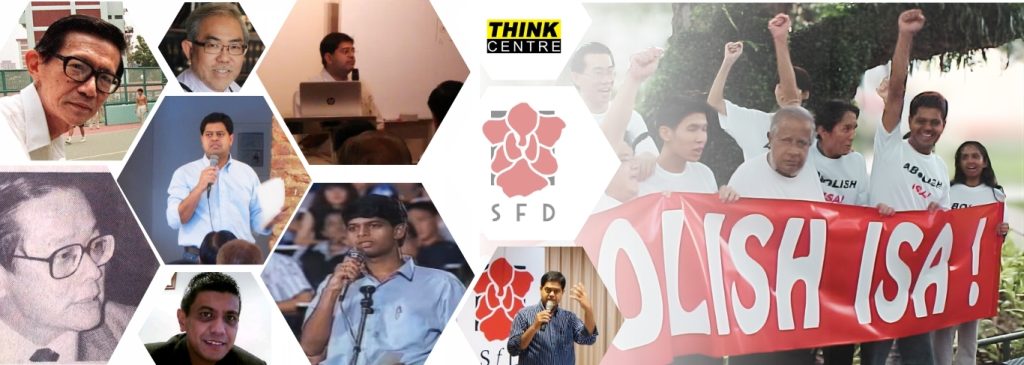
Testimonials from Singaporeans detained without trial under the Internal Security Act (ISA) all state that this law functions more as a mechanism of political control and less as a tool for national security. There is no doubt that as a piece of legislation, the Internal Security Act (ISA) concentrates extraordinary power in the hands of the ruling People’s Action Party, allowing it authority to administer via government channels unfettered detention and inflict both physical and psychological torture.
My nearly 40 years of interaction with Singaporean ex-detainees confirms that the ISA has been used far beyond its stated purpose and consequently preemptively suppresses dissent, instils fear, and limits freedom of expression in Singapore. Thus, over this period, I have questioned the use of ISA against Singaporeans and helped amplify ex-detainees’ stories because – the authority to silence dissent, restrict civil liberties and in particular to inflict torture on Singaporeans without accountability should not be condoned.
During this time the ISA has also been repositioned from a tool to deal with the “communist threat” to legislation used to preempt and deal with “religious extremism”. This has allowed the body politic in Singapore to accept and justify the continued use of the ISA to detain people without trial and torture them while in custody. Ex-detainees all mention in their memoirs that from their experience that the ISA “oversight mechanisms” were at best cosmetic, and not effective.
While the ISA has historically anchored a fear of free expression into the hearts of Singaporeans, it is important to note this law works in tandem with other laws such as POFMA, the Sedition Act, the Broadcasting Act, the Public Order Act (POA) and the Political Donation Act. Together, they construct an ecosystem of fear and self-restraint that effectively traps and neuters mainstream political participation, freedom of expression, and independent activism.
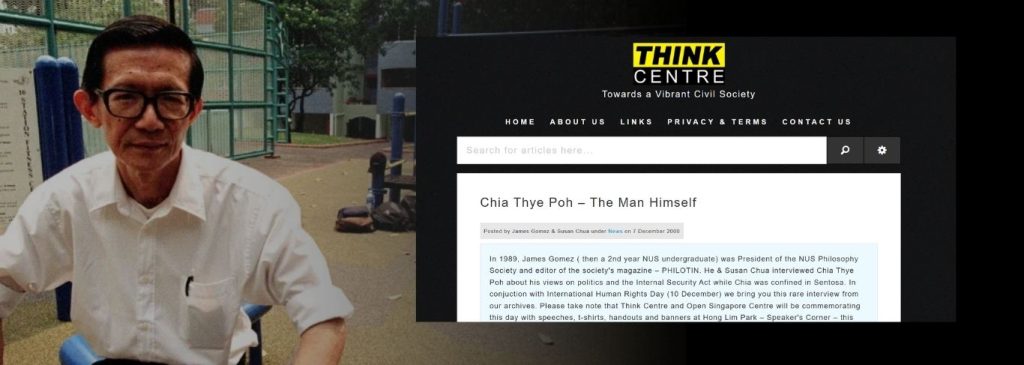
I enrolled at the National University of Singapore (NUS) in 1988 on the back of headlines on the 1987 arrests of the alleged Marxist conspirators. This consciousness led to the questioning of the ISA where as an undergraduate in 1989, I interviewed Chia Thye Poh, one of Singapore’s longest-serving political detainees for NUS Philosophy Society’s magazine, PHILOTIN. Our conversation addressed his prolonged detention without trial, the psychological impact of isolation, and the uncertainty created by the ISA’s indefinite nature.
Chia spoke not only of personal suffering, but of how detention extended its reach to families, relationships, and political life itself. Chia was clear and unwavering in his position, stating, “My stand on the issue has not changed and I have no intention of going into exile someplace else. Main concern is to achieve complete freedom”.
That encounter offered a rare, human insight into how the ISA functions beyond its legal text as a system that disciplines dissent and enforces silence and it shaped my enduring commitment to understanding and challenging the political mechanisms that suppress dissent in the following years.
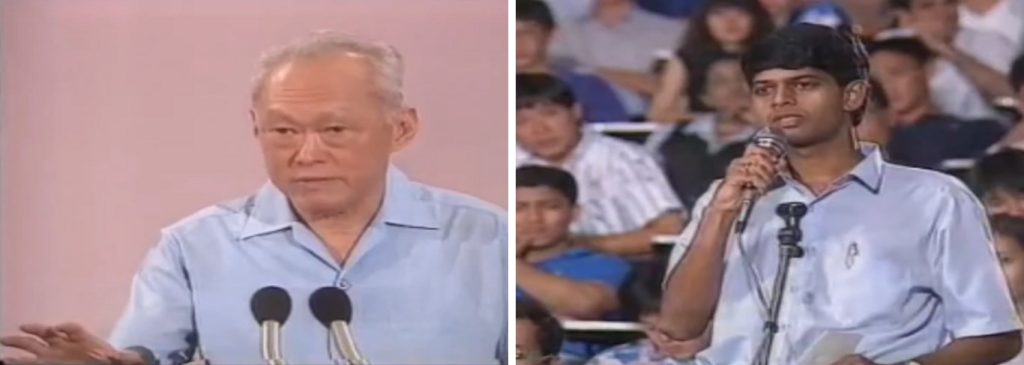
In July 1990, as a 2nd year undergraduate at the National University of Singapore, I stood before the then Prime Minister Lee Kuan Yew and asked him directly in a public forum whether the ISA would ever be abolished. The question was posed against the backdrop of the 1987 arrests of the 16 individuals under the ISA for their alleged involvement in a Marxist Conspiracy.
To that, the then Prime Minister answered that while the collapse of communism has reduced the original justification for the Internal Security Act, the threat of extremist groups has not disappeared. He contended that fringe movements, if left unchecked, can become mainstream and lead to irreversible conflict, citing Sri Lanka as a warning. Preventive detention, he argued, was necessary to suppress destructive groups early. This set the tone on how the ISA will be used in later years against “Islamic terrorists”. The full exchange of this oft circulated video can be found on my YouTube page.
I was in my 20s at the time, yet I found myself questioning the then Prime Minister about the necessity of retaining the ISA, a moment that, for someone my age, carried profound significance and helped shape my lifelong commitment to challenge indefinite detention without trial and support those who shared their experiences of torture under it.
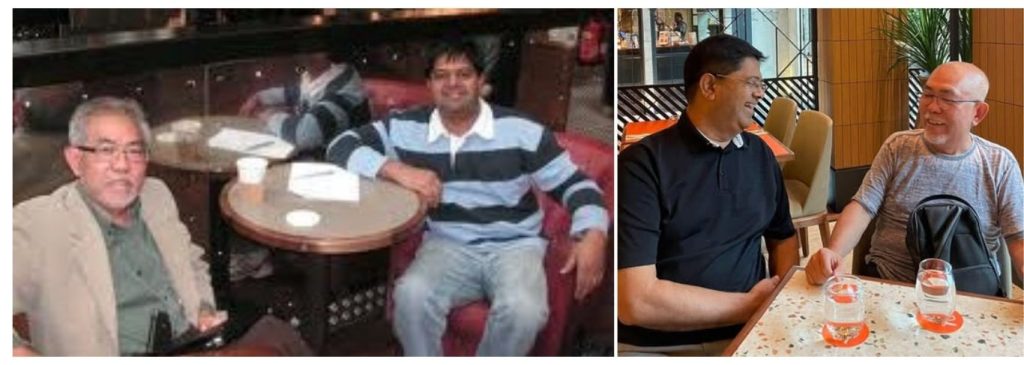
I was in NUS from 1988 to 1992, and thereafter left to the United Kingdom (1992 to 1994) to pursue my Masters at the University of Essex – a course on discourse analysis with a component on human rights. It was during this time in the early 90s that I first met up with Tan Wah Piow. A human rights lawyer, he has been living in London, United Kingdom since 1976 following his imprisonment in Singapore for a year in 1975. In 1987, the Singapore government revoked Tan’s Singapore citizenship after accusing him of being the mastermind behind Operation Spectrum, security operation that took place in Singapore on 21 May 1987. Over the years we would keep in touch and exchange views on the ISA and Singapore politics in general, which helped my understanding of the ISA and the circumstances of Singaporeans living in exile.
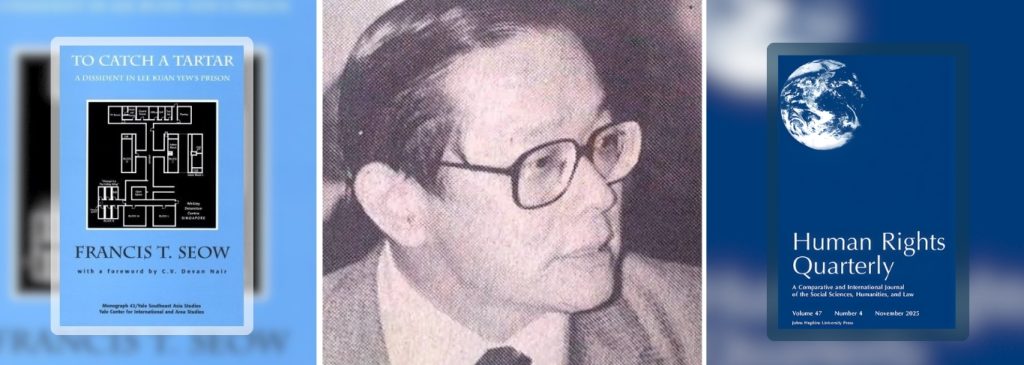
A few years later in 1996, I reviewed “To Catch a Tartar: A Dissident in Lee Kuan Yew’s Prison by Francis T. Seow”. Although I did not know Seow personally, I attended several of his 1988 election rallies when I was an undergraduate. Prior to the elections, Seow was detained for 72 days under the ISA. After the elections he was accused of tax evasion, but left Singapore and was convicted in absentia. These circumstances motivated me to read and review his book.
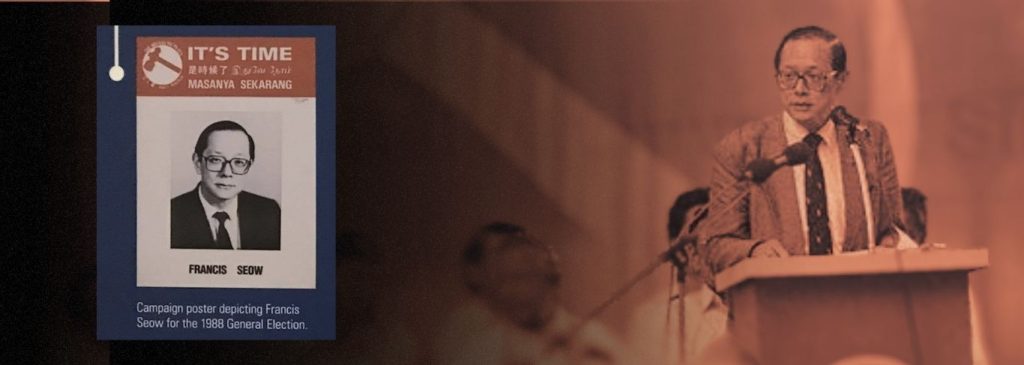
The book details Seow’s personal experiences under the ISA, including his early career and conflict with Lee Kuan Yew, the workings of Singapore’s security apparatus, his role in political prosecutions and the psychological and political impact of his detention. In my review, which was published in Human Rights Quarterly, May, 1996, pages 507-510, (The Johns Hopkins University Press), I situated the ISA as being more than a security tool but also serving as a mechanism for political control. I wrote, ‘Lately, the whole notion of civil and political rights, embedded within the liberal rights tradition, has become obscured, because the discourse of Asian values has come to dominate the discussion on rights in Singapore, highlighting how human rights are dismissed as being culturally a misfit.

This stand, that the ISA is not merely a tool for national security but a mechanism of political control, used to suppress dissent, generate fear, and enforce social compliance beyond those directly detained, would later be expanded in my first book, the 1999 publication, Self-Censorship: Singapore’s Shame, where I documented the experiences of former ISA detainees, Francis Seow and Tan Wah Piow, and explored how fear, media control, and state surveillance fostered widespread public silence, positioning ISA as a central instrument of state overreach rather than a mere security law.
As a result, I argued, the political climate in Singapore “fosters a negative perception towards political expression and causes the majority of people to see individuals and groups engaged in alternative political discourses as illegitimate beings, not to be encouraged but stopped”. This captures my central view, drawn from the testimonials of Singaporean ex-detainees, that apart from the law, fear, social pressure, and internalised censorship also shapes how Singaporeans self-limit and limit others in their free expression of dissent.

In 1999, following my first book, I founded Think Centre, with the objective of critically examining issues related to political development, democracy, the rule of law, human rights, and civil society, while promoting public engagement, accountability, and greater civic participation in Singapore.
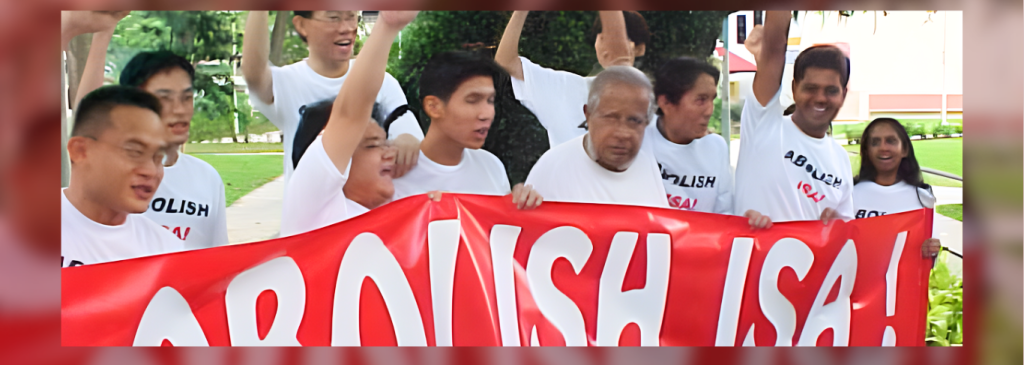
Among the events the Centre organised included the “Abolish ISA” event at Hong Lim Park on 10 December 2000. The then Today newspaper quoted me, “if there’s really no arrest then all the more reason the legislation should be abandoned”, underscoring my long time call that the law lacked justification and needed to be abolished. The event was organised in partnership with the Open Singapore Centre with the attendance of JB Jeyaretnam and Dr. Chee Soon Juan.
In 2010, I engaged with the ISA via Singaporeans for Democracy (SFD) which a few civil society activists and I co-founded that year and of which I was the Executive Director. The objectives of SFD was to promote transparency, protect civic space, and advocate for ISA reform. I supported the organising of forums featuring former ISA detainees to highlight the law’s human and political impact.
SFD foregrounded the voices of former ISA detainees through public interventions and formal inquiries that questioned the state’s control over historical narrative and civic space. When ex-detainee Vincent Cheng was barred from speaking at a National Library seminar in 2010, SFD sought clarification from the Internal Security Department on state interference and the public speaking rights of former detainees.
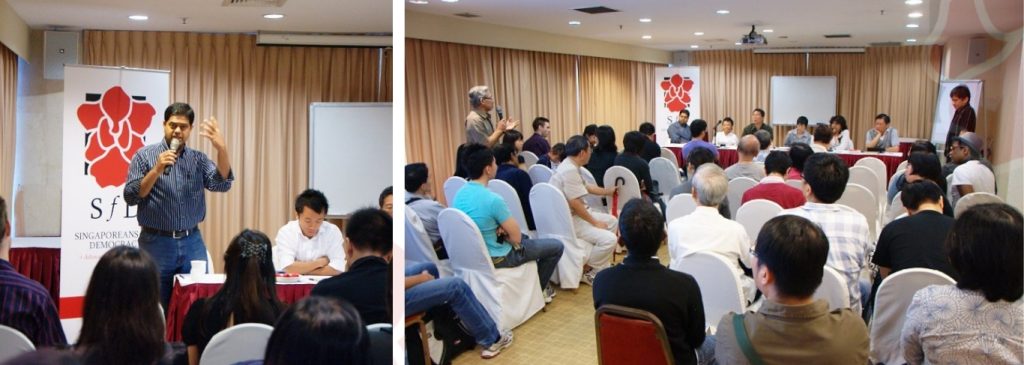
Parallel efforts to press the Ministry of Home Affairs to address allegations of torture raised by former detainee Michael Fernandez were raised by me in SFD’s letter to The Straits Times on 25 December 2010 and followed up publicly on 2 January 2011.
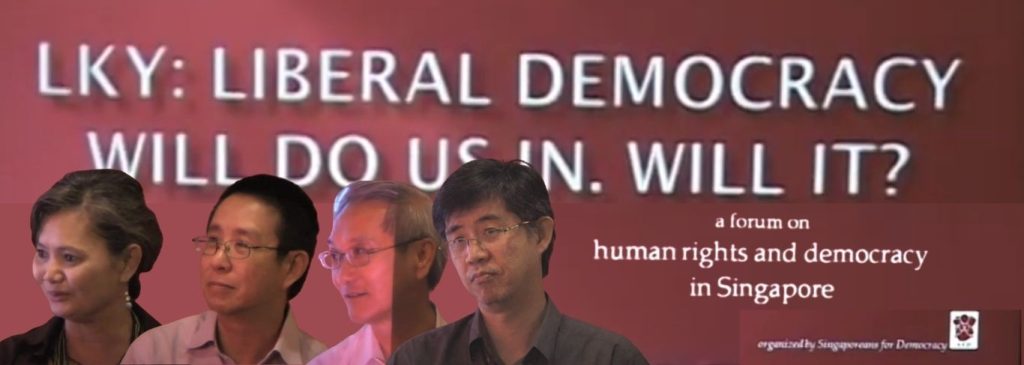
A private event, ‘A Forum on Democracy and Human Rights in Singapore’, organised on 24 September 2011 that featured former ISA detainees, drew official attention and was investigated by the Singapore Police. The purpose of the investigation was to determine whether it constituted a public event held without a permit, highlighting the ecosystem of rules and agencies that surveil civil society activities and discussions that critically evaluate the ISA. The full video of this forum is available on YouTube.
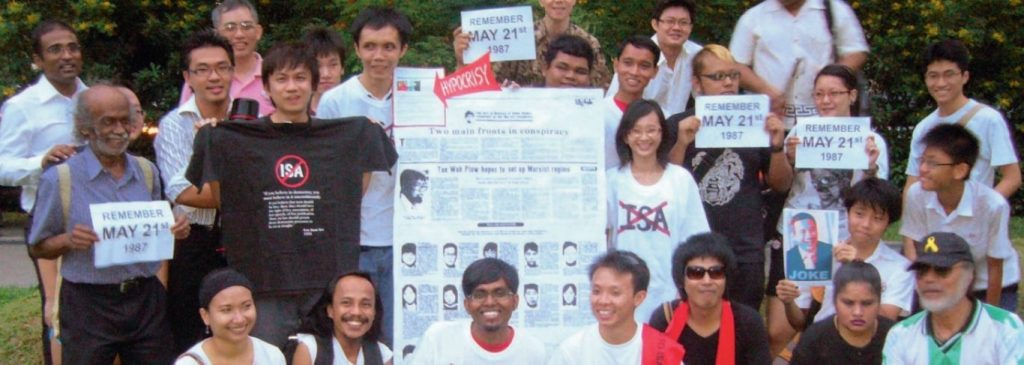
Following that, SFD spearheaded a meeting of activists, ‘Coalition to Abolish ISA In Singapore’s, 10 November 2011, to explore forming a coalition against the ISA. This led to the creation of the Abolish ISA Movement Singapore (AIMS) and its Facebook Page which was active during SFD’s registration period.
SFD’s events, often spearheaded by its Executive Secretary Martyn See, were opportunities to discuss the need for transparency, civic space, and ISA reform, continuing my long-standing effort to expose the Act’s role in suppressing political dissent in Singapore.

In 2012, SFD decided to close down to draw attention to the laws that constrained the working of civil society groups in Singapore. To mark its experiences, SFD commissioned the report Democracy and Civil Society in Singapore: The Politics of Control (2012) to document its activities in its two years of operation and to explain how the various laws have hindered its advocacy work. The report analysed state practices, shared the experiences of SFD and other advocacy groups, and provided a formal account of the systemic challenges faced by those seeking to promote transparency, accountability, and civic engagement in Singapore.
Thereafter much of the ISA related activities continue to be carried out by Function 8 that was established in 2010.
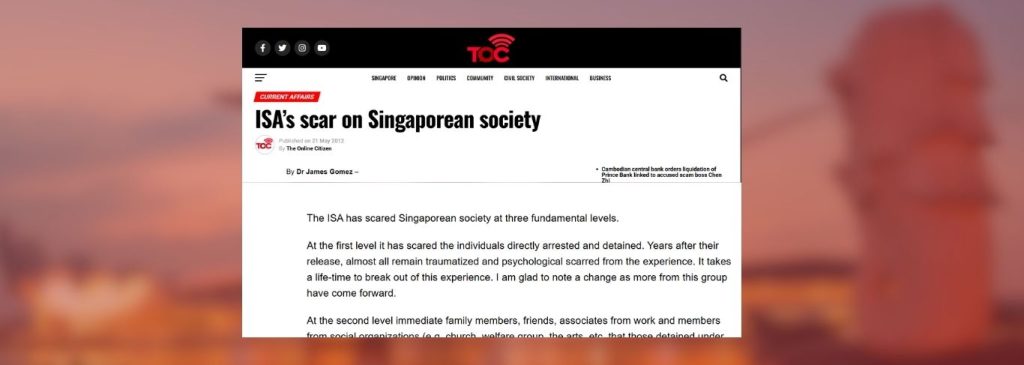
In 2012, my efforts to challenge the continued necessity of the ISA, despite its harmful impact on detainees, were outlined in my article, “ISA’s Scar on Singaporean Society”, published in The Online Citizen. I detailed the enduring impact of the ISA, emphasizing that it inflicted long-term psychological trauma on detainees,“It has scared the individuals directly arrested and detained. Years after their release, almost all remain traumatised and psychologically scarred from the experience”. At a societal level, these effects were not limited to individuals but shaped the broader political culture, conditioning Singaporeans to avoid public critique and reinforcing structural inequalities.
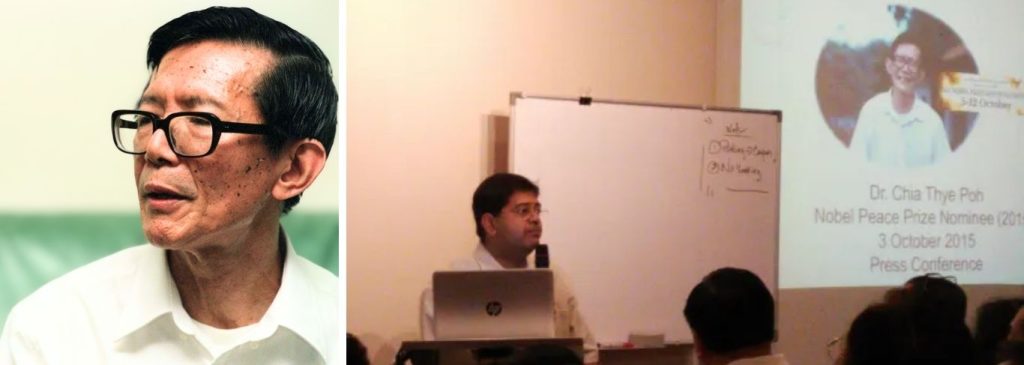
On 3 October 2015, I nominated Singaporean human rights advocate Chia Thye Poh for the Nobel Peace Prize, highlighting Chia’s decades-long struggle for political freedoms and recognition of human rights in Singapore. I wrote to the The Norwegian Nobel Committee, stating Dr. Chia is worthy of consideration for the Nobel Peace Prize for his pioneering work and inspirational continuity through the sacrifices he made by enduring decades-long detention and restrictions. The letter that I wrote to the Norwegian Nobel Committee can be found here : https://tinyurl.com/y2thyapm
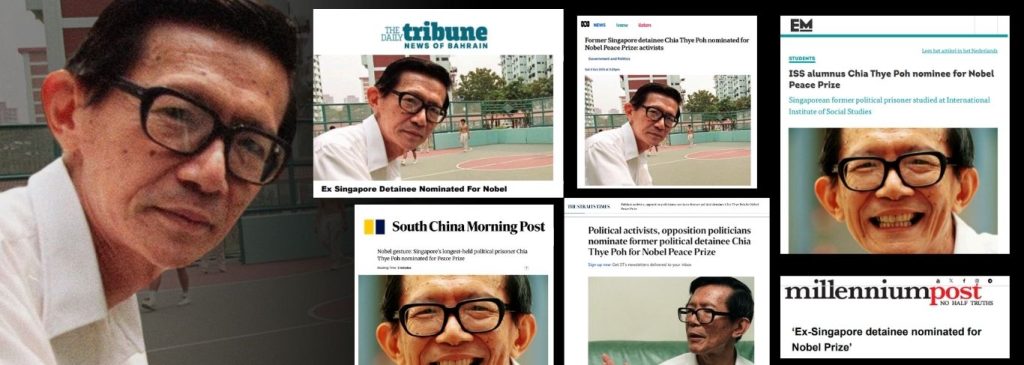
The nomination drew significant media attention, both locally and internationally, bringing renewed focus to Chia’s long detention without trial under the Internal Security Act and his broader efforts to promote civil liberties. The Asia Times noted that the nomination was filled with symbolism and that supporters hoped it would encourage a more balanced historical narrative regarding dissidents’ roles in Singapore’s development.
Similarly, outlets such as ABC News (AFP) highlighted that the nomination was specifically proposed to underscore the importance of political freedom and to bring global attention to the long detention periods of political prisoners under the ISA, pointing out that Chia’s total 32-year period of detention and restrictions exceeded that of former South African President Nelson Mandela. The Millennium Post reported that Singaporean activists said that I had nominated Chia Thye Poh, the city-state’s longest-held political prisoner, for the Nobel Peace Prize to highlight his role in the struggle for greater political freedom.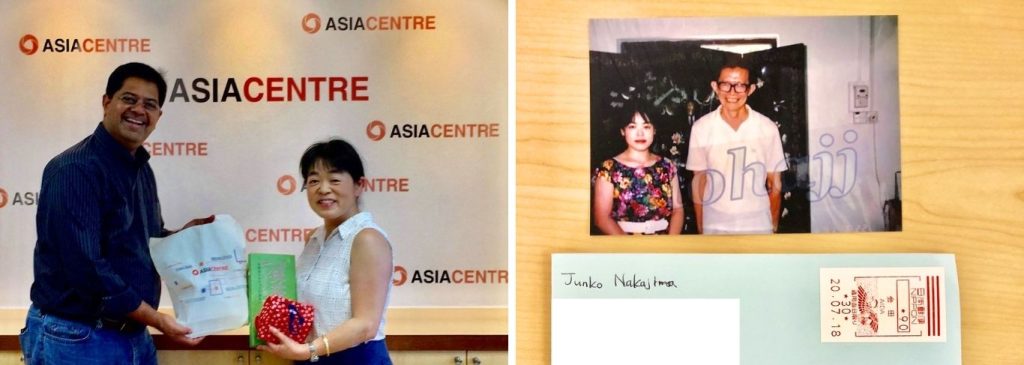
My decision had a significant impact internationally, inspiring individuals such as Dr. Junko Nakajima, a dentist from Japan, to reach out to me in 2018, sharing personal photos and her experience of decades‑earlier meeting with Chia, demonstrating how my efforts amplified global awareness of Singapore’s political detainees and fostered cross‑border engagement on civil and political rights.
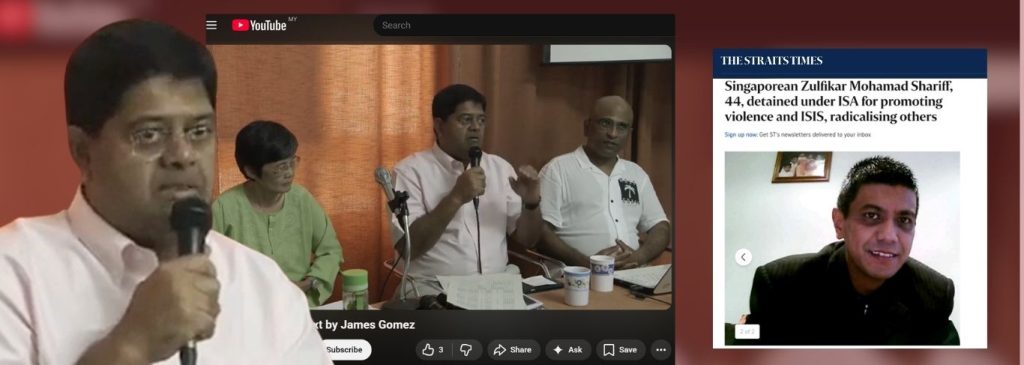
In 2026, I once again had the opportunity to express my concern around the detention without trial of Singaporeans who advocate for civil and political rights. This time by writing the Foreword (to be made available after the book is published) for Zulfikar Sharrif’s upcoming memoir, “Another Day in Paradise”. In his book, Zulfikar details his personal experiences of solitary detention and, like other Singaporean ex-detainees, emphasises that the ISA functions primarily as a political tool to instill fear and suppress dissent, rather than as a genuine security measure. His upcoming memoirs are important because of how the ISA has been pivoted to justify the torture and detention without trial for actions determined as “religious extremism”. This links back to the 1990 remark by Lee Kuan Yew on the need to retain and recaliberate the use of the ISA.
In terms of the backstory, Zulfikar was detained on 1 July 2016 under the Internal Security Act for “terrorism-related” activities. On 29 July that year, the then Prime Minister Lee Hsien Loong wrote in a Facebook post that Zulfikar had attempted to stir up Muslims here in an effort to establish an “Islamic State” in place of Singapore’s democracy.
Three months later, on 10 September 2016, I brought his story to the public and social media, sharing the circumstances of his arrest. I spoke at The AGORA, at a civil society forum, where at that time at least 133 Muslims (both Singaporeans and foreigners) had been arrested and detained without trial under the Internal Security Act (ISA). The seminar, with panelists Teo Soh Lung and the late M Ravi explored the history of the ISA, the constitutional challenges it raises, and Zulfikar’s case, asking the critical question: Should the ISA be abolished?
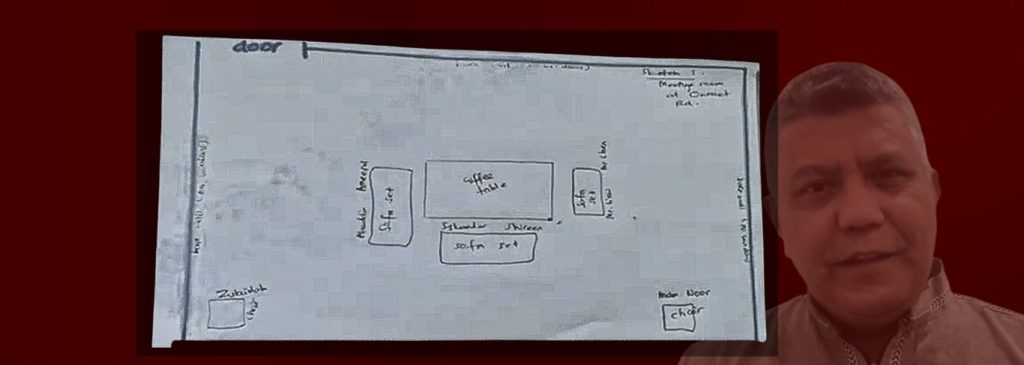
I shared, based on his family’s testimony to me, that I had firsthand information on how “all family and friends… are scared now to do even what they know is the right thing or to speak the truth.” During the seminar, I shared an image of the waiting room, drawn by his children, where family members wait before meeting a handcuffed Zulfikar through a glass partition in another room. The full seminar video with more details of the meeting is available on YouTube.
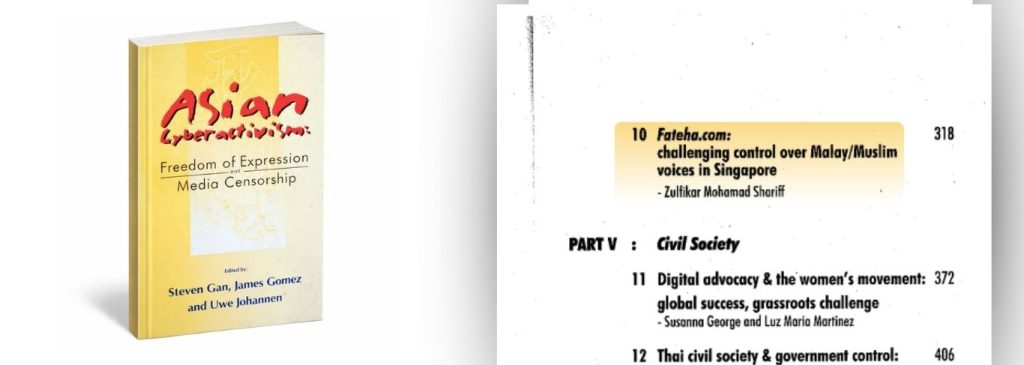
My acquaintance with Zulfikar Sharrif began earlier in 2004, during the publication of Asian Cyberactivism: Freedom of Expression & Media Censorship, which I co-edited with Steven Gan (Malaysiakini) and Uwe Johannen. At that time, I invited Zulfikar to contribute a chapter on Fateha.com, recognising the importance of documenting emerging digital spaces that challenged censorship and expanded avenues for political expression in Singapore. This early engagement with Zulfikar marked the beginning of my tracking his work and worldviews, long before his detention under the Internal Security Act (ISA).
Looking back over several decades, and reflecting on my interaction with Singaporean ex-detainees and reviewing the testimonies in their memoirs, I have come to realise that the Internal Security Act has been used against them primarily, not as a tool for national security, but as a political instrument designed to crush their activism and dissent. During this period, the ISA in the national psyche has also gone through a transformation. From being viewed with outright fear to becoming an unspoken necessary tool to deal with religious extremism where torture that has also been calibrated and refined has additionally become acceptable.
Meanwhile, the ISA continues to instill a latent fear, silence dissent, and caution away those who would want to advocate for regime change. In short, the logic behind the fear is this – if the laws, where fines and term imprisonment are deemed unworkable to contain regime change advocacy, then regime change activities can be labelled as “extreme” and “fringe” and the ISA can be deployed as a tool. That’s why it’s both necessary and urgent to challenge it.
Indefinite detention without transparent judicial oversight and torture while in custody stands in tension with the very principles of civil and political rights. Its simply unhealthy to normalise unchecked executive power.